Shaping the Future of Flexible PCB Manufacturing
The COVID-19 pandemic drove a shift towards purchasing online and virtual shopping, but that didn’t eliminate the need for good customer service. Customers want fast, efficient responses to questions and problems. For PCB manufacturers, this requires a robust system for collecting data and applying machine learning to streamline processes without sacrificing quality. Incorporated into PCB design software, AI can help manage manufacturing costs and reduce the time needed to produce a high-quality product.
Flex PCBs are an integral part of modern electronic devices, enabling complex designs in compact spaces. Designed to withstand vibration and bending, these flexible circuit boards can conform to irregular shapes and fit in non-standard enclosures. They also offer greater durability and are generally lighter than rigid PCBs.
A growing need for compact electronic devices has led to a focus on miniaturization and high-density interconnects. These trends have driven the development of flex PCBs that support a higher density of components in smaller footprints. Advanced materials, flexible design techniques, and efficient component integration have helped flex PCBs meet these requirements.
Advanced technologies like HDI (High-Density Interconnect) have expanded the scope of applications for flexible pcb manufacturer, making them more affordable. This has increased their adoption in industries like automotive, aerospace, and medical that require compact and reliable components. With improved routing densities and lowered signal distortion, HDI PCBs have become more efficient than their traditional counterparts.
With the rapid growth of the Internet of Things (IoT), incorporating wireless communication protocols is essential for efficient IoT connectivity. PCBs that incorporate these communications protocols enable IoT sensors to communicate with each other, and they also facilitate the exchange of data with external networks. This allows IoT devices to monitor and control each other, as well as connect to external sources of power.
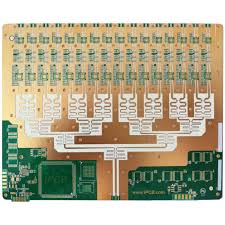
Innovations Shaping the Future of Flexible PCB Manufacturing
High-frequency PCBs incorporate specialized components that can transmit data at high frequencies, ensuring accurate transmission and performance. This technology enables higher connectivity speeds, and it has helped bolster the productivity of digital radios and 5G cellular network transmitters.
Advanced materials, flexible design techniques, and efficient manufacturing processes are shaping the future of flex PCB manufacturing. These innovations help to improve the durability, conductivity, and thermal management of flex circuit boards, allowing them to perform at their best in challenging operating conditions. Moreover, they address the need for environmental sustainability through lower energy consumption and the use of biodegradable substrates.
Testing is also used to inspect the visual appearance of a flex circuit. It can spot scratches, delamination, and misalignments that may have occurred during the manufacturing process. It is essential that a flex circuit has a good look and feel, as this will affect the customer’s experience with the product.
Flexible PCBs can be bent, folded, or wrapped around components, allowing them to fit into smaller or more compact spaces. This makes them particularly suitable for small, intricate devices like medical implants or mobile devices. Weight Reduction: Since flexible PCBs are made from lightweight materials, they help reduce the overall weight of the product. This is especially important in industries such as aerospace and automotive, where minimizing weight is essential for performance and fuel efficiency.