Flex PCB Manufacturing for Military
When it comes to military applications, performance and durability are essential. Military PCBs are engineered to withstand harsh environments, resist vibration and shock, and maintain peak performance in demanding situations. These circuit boards are also flexible, allowing them to adapt to unique shapes and configurations.
MV Flex Circuits offers a wide range of Military flex pcb manufacturing services to meet the needs of any project. Our team of experienced engineers can help you create a prototype that fits your exact specifications, or a fully-manufactured product that meets industry standards and requirements. From PCB design to prototyping to assembly, we have the resources and expertise to make your project a success.
Flex-PCBs are multi-layer and can be single- or double-sided. They’re used in a wide variety of applications from medical devices (pacemakers, cochlear implants, handheld monitors) to advanced aerospace and military/avionics systems like weapon-guided missiles, GPS, aircraft radar, or surveillance or tracking equipment.
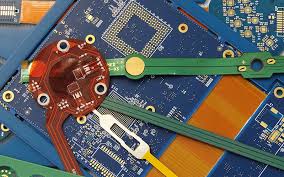
Flex PCB Manufacturing for Military Applications
A flex-PCB requires special base materials for its layers to adhere. These may be acrylic, epoxy, or pressure-sensitive adhesives. These adhesives are often chosen to protect against environmental factors and ensure that the layers don’t move during etching.
Another important consideration is the ability to handle high temperatures. To accommodate this, flex-PCBs are typically made with heat-resistant materials such as polyimide. They can also be designed to withstand electromagnetic interference (EMI) with the inclusion of shielding elements such as aluminum or copper.
A flex PCB is usually manufactured using the same steps as rigid PCBs, with some additional ones. The copper foil is usually rolled annealed to improve its fatigue resistance. This is done to reduce work-hardening during bending and movement, and it’s especially important for a flex PCB that will be crimped or folded in use.
The conductive copper on the PCB is then chemically etched to expose it. A photo-imageable solder mask is applied to the exposed copper, protecting it during the soldering process. Lastly, the coverlay is applied to protect the PCB from moisture and dust. It can be fabricated from a number of different materials, but the most common is an additional layer of polyimide.
Depending on the final application, a flex-PCB can be coated with a protective resin or film to prevent damage and contamination. These coatings are often polyimide or polyester, and can be cured with UV light. Flexible Printed Circuit Boards (Flex PCBs) have revolutionized the electronics industry with their ability to adapt to intricate designs and unconventional shapes.
Flex PCB manufacturing encompasses a meticulous process that blends cutting-edge technology with precision engineering. From conceptualization to fabrication, every step demands expertise and attention to detail to ensure the final product meets the rigorous standards of performance and reliability.
Besides these materials, a flex-PCB can have an extra layer of copper that’s added to the plated area to increase its strength. It’s also possible to add a protective bead to the flex-to-rigid joins or interfaces. These beads offer mechanical reinforcement to the fulcrum of the flex-to-rigid joint that would otherwise fatigue and crack over time. This can be particularly helpful for high-speed or dynamic applications.