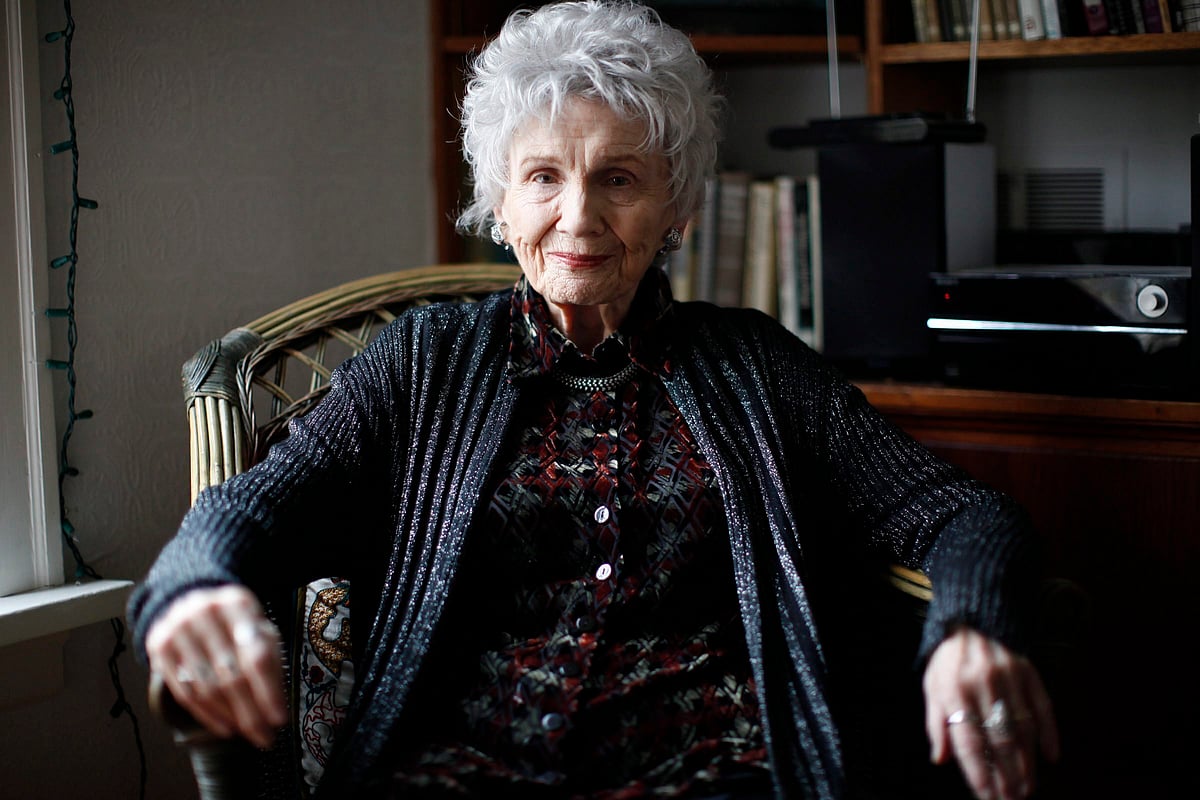
When Munro died in May at age 92, she was celebrated worldwide for narratives which documented rare insight into her characters’ secrets, motivations, passions and cruelties, especially those of girls and women. Admirers cited her not just as a literary inspiration, but as a kind of moral guide, sometimes described as “Saint Alice.” A New York Times essay that ran shortly after her death, by Canadian author Sheila Heti, was titled “I Don’t Write Like Alice Munro, But I Want to Live Like Her.”
“No one knows the compromises another makes, especially when that person is as private as she was and transforms her trials into fiction,” Heti wrote. “Yet whatever the truth of her daily existence, she still shines as a symbol of artistic purity.”
Educators in Canada and beyond are now rethinking her life and work. At Western University in London, Ontario, Munro’s alma mater, the school has posted a statement on its website saying that it was “taking time to carefully consider the impact” of the revelations. Since 2018, Western University has offered an Alice Munro Chair in Creativity, with a mission to “Lead the creative culture of the Faculty of Arts and Humanities, serving as a mentor and a model.” That chair, held for the past academic year by Heti, will be left unfilled as “we carefully consider Munro’s legacy and her ties to Western,” according to the school.
Requests with Heti’s agent and publicists for comment were not immediately answered.
For the fall semester at Harvard University, authors and faculty members Laura van den Berg and Neel Mukherjee will be co-teaching “Reading for Fiction Writers,” a review of literary works ranging from the science fiction of Octavia Butler to the “realist” fiction of Munro. Van den Berg, a prize-winning writer whose books include the story collection “The Isle of Youth” and the novel “State of Paradise,” says that Munro’s failure to support Skinner has forced her to rethink her approach to the class.
“I’ll never read Munro the same away again, and won’t be teaching her the same way,” she says. “To me, what was so painful about what Andrea Skinner has been through is the silence. And feeling that she could break her silence after her mother was gone. To me, to just stand in front a group of students and read the lecture I had originally prepared would feel like a second silencing.”