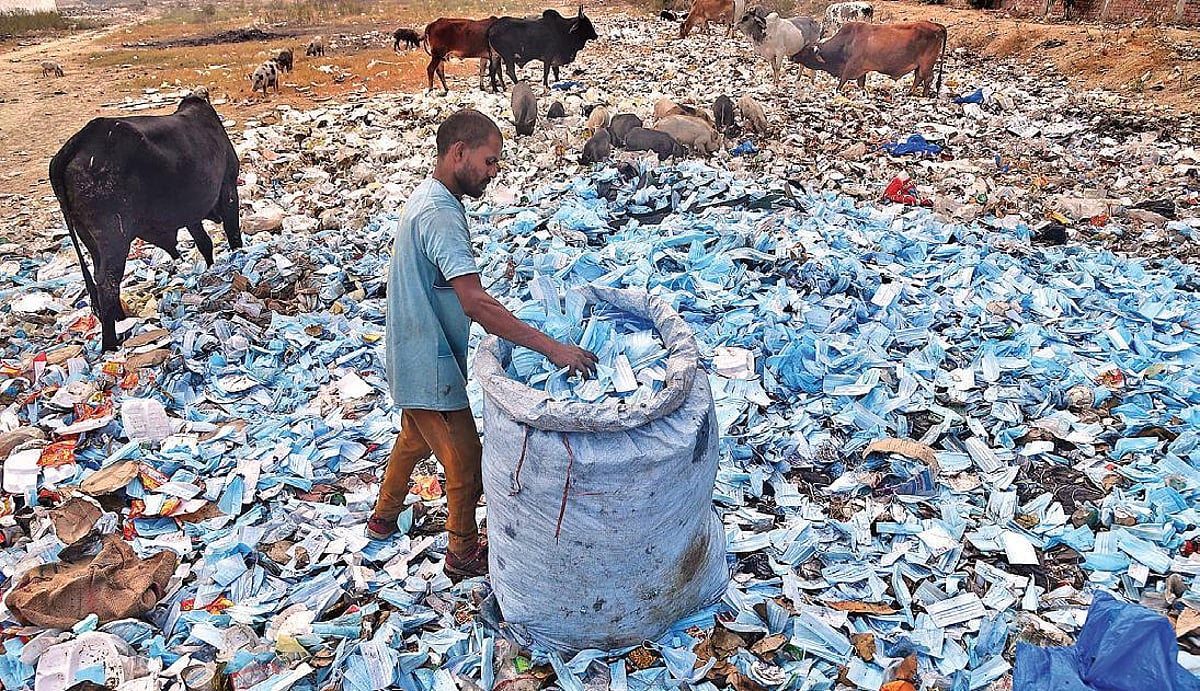
The study found that filtering facepieces released three to four times more microplastic particles than standard surgical masks. Most particles were extremely small – less than 100 micrometres in size, roughly the width of a human hair – and made primarily of polypropylene, a common plastic used in mask production.
Other plastics such as polyethylene, polyester, nylon and PVC were also detected, especially in the filtering facepieces. As these materials don’t easily break down, they can accumulate in the environment, causing harm to ecosystems and wildlife that may ingest or become entangled in them.
Some of these materials can also contain chemical additives that, once ingested, may disrupt hormones or negatively impact human health.
In addition to microplastics, the researchers discovered that chemicals including Bisphenol B were released from some types of masks into the water. These substances are known to harm fish and other aquatic organisms, and could also affect humans if they enter the food chain, pollute water sources, or accumulate in the environment over time.
One of the researchers, Dr. Anna Bogush, has underlined the urgent need to rethink how we produce, use, and dispose of face masks.
“We can’t ignore the environmental cost of single-use masks, especially when we know that the microplastics and chemicals they release can negatively affect both people and ecosystems,” said Bogush.
“As we move forward, it’s vital that we raise awareness of these risks, support the development of more sustainable alternatives, and make informed choices to protect our health and the environment,” said Bogush.