PCB printed circuit board assembly evolved over time
The journey of Printed Circuit Board (PCB) assembly is a testament to the relentless march of technological progress, marked by a series of innovations and advancements that have revolutionized the way electronic devices are manufactured. From humble beginnings as hand-wired circuits to the sophisticated automated assembly processes of today, the evolution of PCB assembly has been driven by the pursuit of efficiency, reliability, and miniaturization.
In the early days of electronics manufacturing, pcb printed circuit board assembly was a labor-intensive and time-consuming process, primarily carried out by skilled technicians who manually soldered components onto bare boards. Each component had to be carefully placed and soldered onto the board, a painstaking task that required precision and attention to detail. As a result, production volumes were limited, and the cost of electronic devices was prohibitively high for all but the most specialized applications.
The advent of automated assembly techniques in the mid-20th century marked a significant milestone in the evolution of PCB assembly. Automated pick-and-place machines replaced manual component insertion, dramatically increasing throughput and reducing assembly times. Furthermore, the introduction of wave soldering and reflow soldering techniques enabled mass production of PCBs with consistent solder joints, improving reliability and quality.
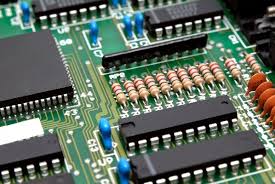
How has PCB printed circuit board assembly evolved over time?
The 1980s witnessed a revolution in surface mount technology (SMT), which further propelled the evolution of PCB assembly. SMT components, characterized by their small size and light weight, allowed for higher component densities and greater miniaturization of electronic devices. This shift towards smaller, more densely packed PCBs required corresponding advancements in assembly techniques, such as stencil printing for precise deposition of solder paste and reflow soldering to bond components to the board.
The turn of the 21st century brought about a new era of PCB assembly characterized by the integration of advanced materials, processes, and technologies. Lead-free soldering became the norm, driven by environmental regulations and concerns over the toxicity of lead-based solders. Additionally, the development of high-speed, high-density interconnect (HDI) PCBs enabled the integration of complex circuitry into smaller form factors, paving the way for sleeker, more powerful electronic devices.
Moreover, the rise of Industry 4.0 and the Internet of Things (IoT) is driving the adoption of smart manufacturing technologies in PCB assembly. Automated assembly lines equipped with sensors, robotics, and data analytics enable real-time monitoring and optimization of the production process, improving efficiency, reducing waste, and enhancing quality control. Furthermore, advancements in artificial intelligence and machine learning are revolutionizing defect detection and quality assurance, enabling manufacturers to identify and rectify issues with unprecedented speed and accuracy.
Looking ahead, the future of PCB assembly promises even greater innovation and evolution as manufacturers continue to push the boundaries of what is possible. Emerging technologies such as additive manufacturing and 3D printing hold the potential to revolutionize the way PCBs are fabricated, allowing for rapid prototyping and customization of complex geometries. Furthermore, the integration of renewable materials and sustainable manufacturing practices is becoming increasingly important as the industry seeks to minimize its environmental footprint.
In conclusion, the evolution of PCB assembly is a testament to human ingenuity and the relentless pursuit of progress. From manual soldering to automated assembly lines, from through-hole components to surface mount technology, the journey of PCB assembly is a story of innovation, adaptation, and advancement. As technology continues to evolve, the future of PCB assembly holds exciting possibilities for smarter, more efficient, and more sustainable manufacturing processes.